Do Tailgate Protectors Actually Work? What They Protect and Who Needs One
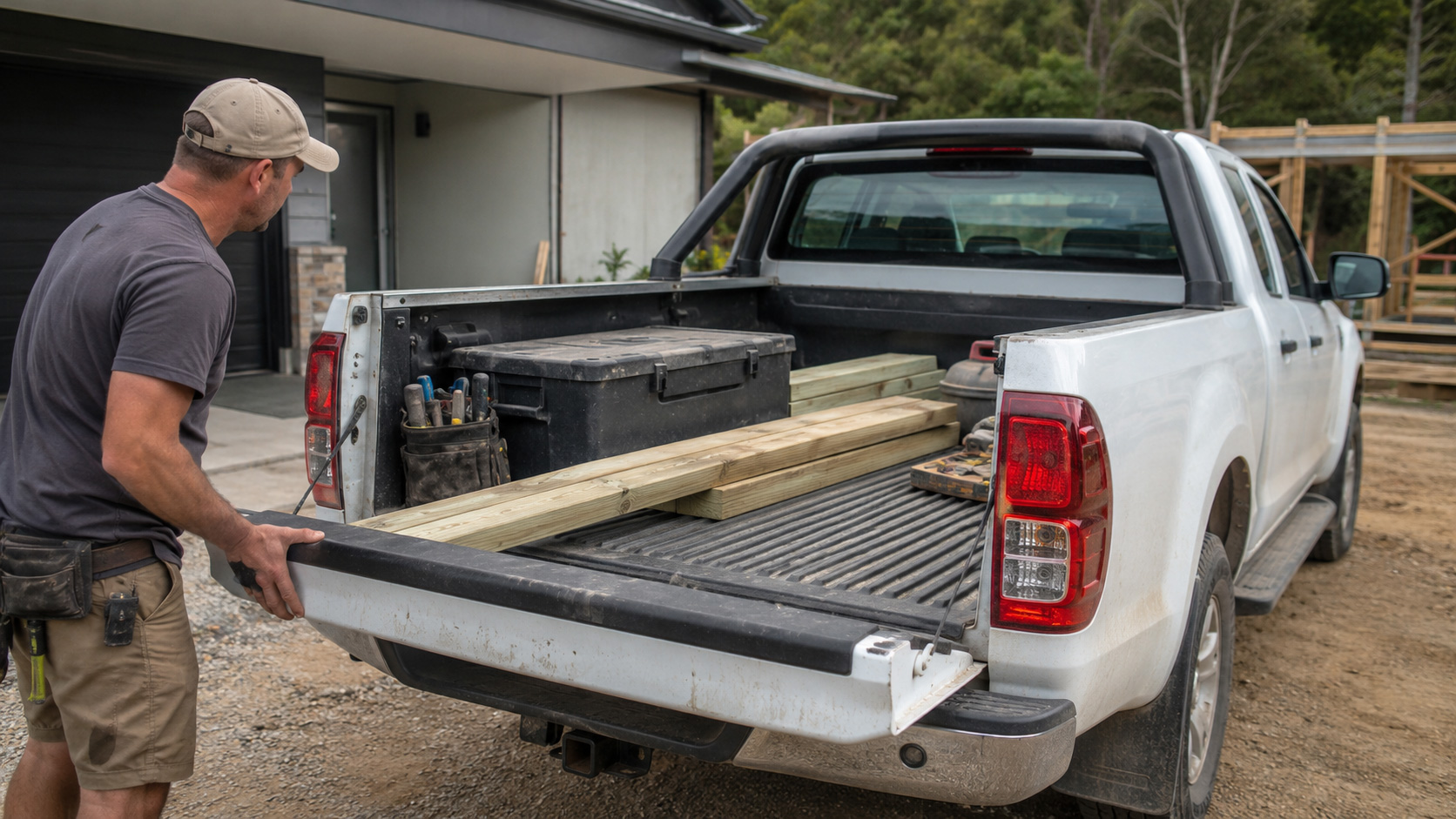
A ute tailgate can start looking worn surprisingly quickly, especially when the tub is used for more than the occasional grocery run. Timber gets slid across it, toolboxes get dragged in and out, camping gear gets rested on the edge, and sometimes the tailgate becomes a temporary workbench without anyone really thinking about it.
A tailgate protector does work, but it solves a fairly specific problem. It is designed mainly to take the scratches, scuffs and everyday wear that would otherwise end up on the tailgate itself.
Whether that makes it worthwhile depends less on the accessory and more on how you actually use your ute.
Quick answer
A tailgate protector is most useful if you regularly:
- load tools, timber or building materials
- slide bulky gear in and out of the tub
- use your ute for work several days a week
- already have visible wear around the top of the tailgate
If the tub rarely carries anything heavier than shopping bags or weekend luggage, it is probably a much lower priority.
Why the Tailgate Edge Gets Damaged So Easily
The top edge of a ute tailgate sits directly in the path of almost everything that goes into or comes out of the tub.
A toolbox might only touch it for a second. A length of timber might slide across it. A storage box may scrape against the edge as you pull it towards you. None of those incidents necessarily causes much damage on its own.
The problem is repetition.
On a work ute that gets loaded and unloaded throughout the week, hundreds of small contacts gradually become scratches, scuffs and worn paint. Dirt and grit trapped between the cargo and the painted surface can make that abrasion worse.
There is also the way people naturally use an open tailgate. It becomes somewhere to put tools, organise equipment, sit while taking a break, or support the end of something being loaded. That makes it one of the more heavily used exterior surfaces on many utes.
What Does a Tailgate Protector Actually Protect?
The top edge
This is where a basic tailgate guard does most of its work.
Instead of timber, tools, boxes and equipment repeatedly rubbing against the original tailgate surface, they make contact with the protector.
Paint and finish
A protector creates a replaceable wear surface over an area that would otherwise take repeated scratches and scuffs.
It will not keep every part of the tailgate looking brand new, but it can significantly reduce the day-to-day cosmetic wear in the area it actually covers.
Existing cosmetic wear
A protector can also make sense after the damage has already started.
If the top of the tailgate has picked up light scratches and scuffs over years of use, covering that high-wear area can give it a cleaner appearance while helping prevent the same surface from taking more direct abrasion.
What it should not be confused with is structural protection. A plastic or moulded tailgate guard is a wear protector, not armour for the rear of the vehicle.
Where It Helps, and Where It Doesn’t
| Situation | Does it help? | Why |
| Sliding timber across the tailgate | Yes | Separates the load from the painted tailgate edge |
| Loading toolboxes and work gear | Yes | Helps reduce repeated scratches and scuffs |
| Loading camping gear and storage boxes | Yes | Useful when bulky items regularly pass over the tailgate |
| Resting tools on the open tailgate | Yes | Gives the covered area a more durable wear surface |
| Dropping a very heavy object onto the tailgate | Limited | It is not designed to prevent major dents or structural damage |
| Protecting the floor and walls inside the tub | No | That is the job of a tub liner or similar tub protection |
| Rear-end collision damage | No | A tailgate protector is not crash protection |
That distinction matters. A tailgate guard and a tub liner might both be described as ute protection, but they protect different areas and solve different problems.
If the inside of your tub is taking a beating from loose equipment, a tailgate cap will not fix that. Likewise, a tub liner does not necessarily protect the upper tailgate edge where equipment gets dragged across during loading.
Who Actually Gets the Most Value From One?
Tradies and high-use work utes
This is probably the most obvious use case.
Builders, carpenters, landscapers, plumbers and other tradies can move tools and materials in and out of a ute many times during a normal week. The more frequently cargo passes over the tailgate, the more opportunity there is for wear.
It does not necessarily matter whether the individual items are particularly heavy. Repeated contact is the bigger issue.
If your ute is part of your everyday workflow rather than simply your transport to work, a tailgate protector is much easier to justify.
Touring and camping utes
Touring setups can be surprisingly hard on a tailgate too.
Storage boxes, recovery gear, folding furniture, cooking equipment, eskies and other bulky items may be packed and unpacked repeatedly during a trip.
You probably will not reach the same loading frequency as a busy work ute, but protecting the main contact edge can still make sense if the tub is heavily used whenever you travel.
Weekend DIY and occasional load carrying
This is where the answer becomes less clear.
If you use the ute for a Bunnings run now and then, transport some garden supplies on weekends or occasionally help move something bulky, a protector can still prevent scratches.
It just might not be an accessory you need to prioritise immediately.
Utes that spend most of their time commuting
If the tub rarely gets used, the benefit drops considerably.
A tailgate protector does not become more useful simply because you own a ute. Its value comes from how often that particular part of the vehicle gets exposed to wear.
Is a tailgate protector probably worth it for you?
Check the statements that apply:
- I use the tub several times a week
- Tools or cargo regularly touch the top of the tailgate
- My tailgate is already starting to show scratches or scuffs
- I expect to keep using the ute this way for several years
Three or four boxes: It is probably a useful addition.
One or two boxes: It depends on how much the cosmetic wear bothers you.
None: It is probably not a priority.
One-Piece, Three-Piece or More Coverage?
Not every tailgate protector covers the same amount of the vehicle.
A one-piece tailgate guard cap is the simplest option. It runs along the upper edge of the tailgate, concentrating protection on the area most likely to come into contact with cargo during loading and unloading.
For many work and everyday utes, that is all the coverage that is really needed.
A three-piece tailgate cover or trim guard extends protection beyond a single upper strip. Depending on the design, the additional pieces can cover more of the tailgate surface while also creating a more noticeable exterior styling change.
There are also larger heavy-duty protectors intended to cover more of the high-use area. These make more sense when protection is the priority and the tailgate is regularly exposed to equipment, materials and repeated loading.
There is no reason to automatically choose the option with the most coverage. Start with where your own tailgate is actually getting touched and worn.
You can compare the different styles in the Tailgate & Tub Guards range.
Fit Matters More Than It Might Seem
Tailgates are not universal flat panels, so buying solely on the basis that something is labelled “for a ute” is not enough.
Different makes, models and generations have different dimensions, contours and upper-edge profiles. Even two generations of the same model can require differently shaped protectors.
The first thing to check is therefore the exact make, model and applicable year range.
Coverage matters too. A protector should sit over the area that is actually exposed when you load the vehicle. If your main concern is the upper edge, a correctly shaped one-piece cap may make more sense than adding coverage elsewhere simply for the sake of it.
This is one of those accessories where a simple product that matches the vehicle properly is often more useful than a more elaborate option that does not suit how the ute is used.
Tailgate Protection Is More About Use Than Price
It is easy to judge a ute accessory by asking whether the product itself is expensive or cheap.
A better question is how often it will actually do something for you.
Imagine one ute that carries tools and building materials every day. Gear is moved across the tailgate morning and afternoon, five or six days a week. Protecting that contact point makes practical sense because the protector is doing its job constantly.
Now consider another ute that spends almost all of its time commuting and carries bulky cargo once every few months. Even an inexpensive protector may add very little practical value.
The same thinking applies to the rest of a work ute. Useful accessories are the ones that solve problems created by the way the vehicle is genuinely used, not simply the ones available for it.
That is also the approach covered in our guide to setting up a ute for work, where the priority is building around your actual workload rather than trying to tick every accessory box.
So, Do You Actually Need a Tailgate Protector?
If you regularly load tools, timber, equipment, camping gear or other bulky items across the back of your ute, a tailgate protector is a simple way to put a tougher wear surface between that cargo and the tailgate itself.
For a work ute that gets used hard, that can make it an easy accessory to justify. The same applies to touring vehicles where the tub is constantly being packed and unpacked.
For a ute that spends most of its life on sealed roads with very little going into the tub, it is much less important.
The simplest way to decide is to look at your tailgate now. If the upper edge is already collecting scratches and scuffs, you probably have your answer.