Are Mud Flaps Worth It on a 4×4? Where They Make the Biggest Difference
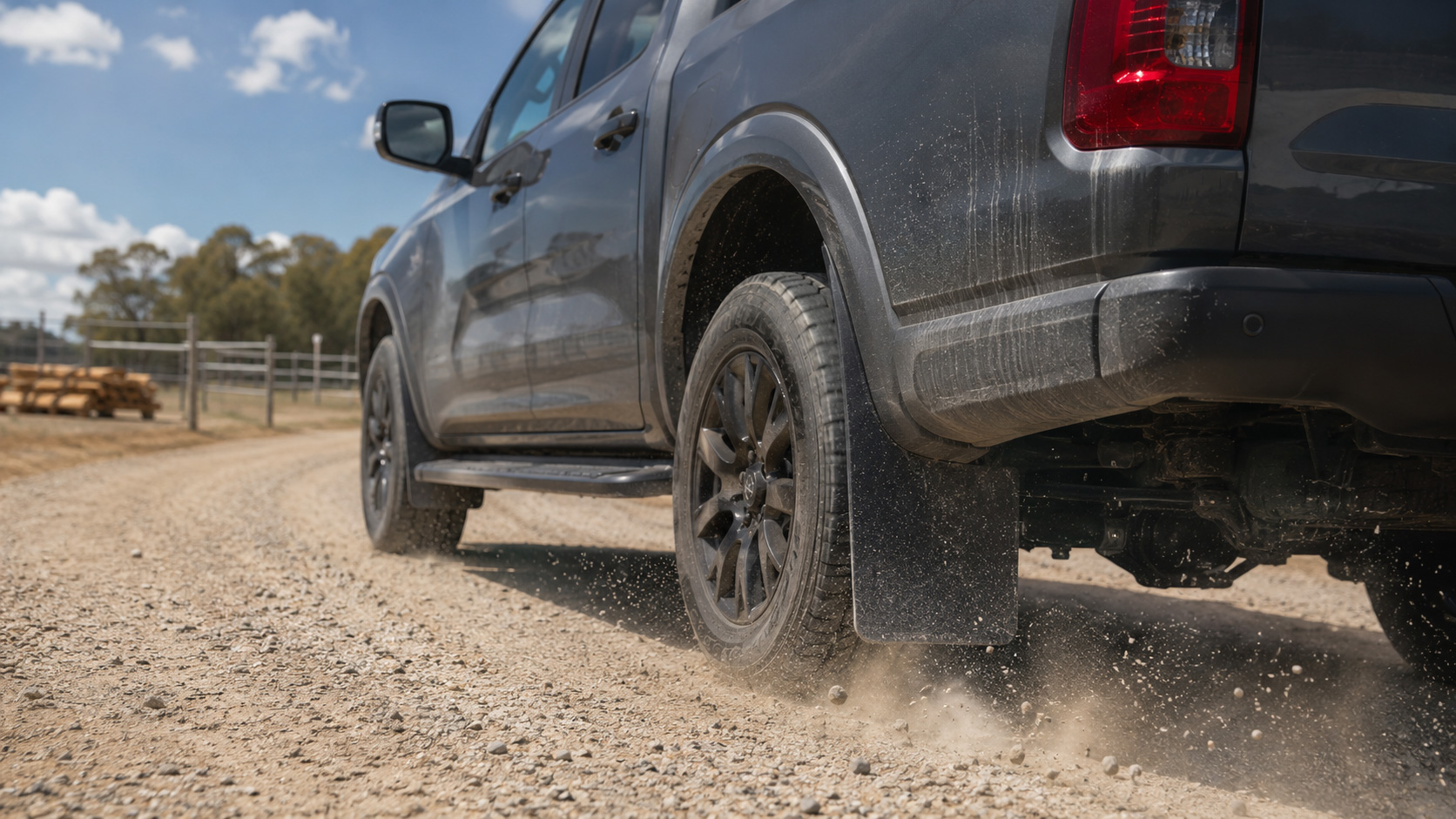
Drive through a wet worksite or along a loose gravel road and you can see exactly what your tyres are doing. They are not just rolling over the surface. They are constantly picking up water, mud, fine grit and small stones, then throwing that material rearward and outward as they rotate.
Mud flaps sit directly in that path. Their job is simple: intercept some of the spray and debris before it reaches the lower body of the vehicle, whatever you are towing, or other road users behind you.
That does not mean every 4×4 needs the biggest mud flaps available. Their value depends heavily on where you drive, what your tyres are throwing up and how much protection you actually need.
| The protection path Front tyre -> mud flap -> less debris reaching lower doors, side steps and rear bodywork Rear tyre -> mud flap -> less spray, grit and gravel travelling behind the vehicle |
What Are You Actually Protecting?
The most obvious benefit is keeping some of the mess off the vehicle, but that is only part of the story. Tyres can throw debris with enough speed to mark painted surfaces, coat side steps in grit and repeatedly pepper lower panels with small particles.
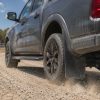
Front mud flaps are positioned to reduce the amount of material travelling from the front tyres towards the side of the vehicle. Rear mud flaps focus more on what is being thrown behind the vehicle. That becomes especially relevant when you regularly drive on loose surfaces or tow a trailer or camper.
A mud flap is therefore less like a shield over the whole vehicle and more like a barrier placed at one high-traffic exit point for debris. It only helps with material that actually reaches it, but in the right conditions that can still make a noticeable difference.
Mud, Water and Stones Are Three Different Problems
Mud and dirty water
On wet roads, muddy tracks and worksites, tyres can cover the lower half of a vehicle very quickly. Mud flaps reduce some of that rearward spray, helping keep lower panels, steps and the area behind the vehicle cleaner. They will not keep a 4×4 spotless in muddy conditions, but they can reduce how much material is being thrown directly from the tyre.
Fine gravel and grit
Fine grit is easy to underestimate because the damage usually builds slowly. Small particles repeatedly striking painted panels can contribute to dulling, light chips and general wear over time. This is where mud flaps can be useful on vehicles that spend a lot of time on gravel access roads, rural properties or construction sites.
Larger stones
A mud flap can also intercept some larger stones, but it is not complete stone-chip protection. The angle of the tyre, vehicle speed, road surface and size of the debris all affect where a stone travels. Think of mud flaps as reducing exposure rather than guaranteeing that every stone will be stopped.
Where Mud Flaps Make the Biggest Difference
| Where you drive | Mud flap value |
| Sealed suburban roads | Low to moderate |
| Wet highways | Moderate |
| Gravel roads | High |
| Construction sites | High |
| Farm and rural access roads | High |
| Regular remote touring | High |
The rougher and looser the surface, the more work a mud flap actually has to do.
Front and Rear Mud Flaps Don’t Do Exactly the Same Job
Front mud flaps
The front tyres can send grit, water and small stones along the lower sides of the vehicle. Front mud flaps are mainly useful for reducing that rearward spray before it reaches areas such as the lower doors and side steps.
Rear mud flaps
Rear mud flaps deal with what the back tyres are throwing behind the vehicle. That matters for keeping spray and debris down, and it becomes more important when another vehicle, trailer or caravan is sitting directly in that path.
The Towing Angle People Often Forget
If you tow a caravan, camper trailer or work trailer on unsealed roads, the rear tyres are not only throwing debris at your own vehicle. Gravel and grit can travel towards whatever is behind you as well.
Rear mud flaps can reduce some of that direct spray, particularly when the tyre is picking up loose material from the road. They are not a guarantee against stone chips on a caravan or trailer, because debris can come from many angles and from other vehicles too. Still, reducing one direct source of gravel makes them much easier to justify for regular towing on unsealed roads.
Mud Flaps vs Fender Flares: They Work in Different Directions
| Mud Flaps | Fender Flares | |
| Position | Behind the tyre | Around the wheel arch |
| Main direction of protection | Rearward spray and debris | Outward tyre coverage |
| Styling impact | Usually minor | Often more noticeable |
| Wider tyre coverage | Not the main purpose | More relevant |
| Can they work together? | Yes | Yes |
If you want a deeper explanation of wheel-arch coverage, see our Fender Flares Explained – Types, Benefits and Legal Considerations in Australia.
Bigger Isn’t Automatically Better
It is tempting to assume that a longer or wider mud flap must provide better protection. In reality, useful coverage depends on how the flap lines up with the tyre and the way the vehicle is used.
A well-positioned, vehicle-specific mud flap can be more useful than an oversized option that does not suit the body shape or intended driving conditions. Tyre coverage, clearance and how far the wheel sits outward all influence whether debris is likely to hit the flap in the first place.
This is particularly important on 4x4s that have moved away from the factory wheel and tyre setup.
What Changes If You’ve Fitted Different Wheels or Tyres?
Wider tyres or a different wheel offset can change the path of spray and debris. If a tyre sits further out from the body than it did from the factory, the original mud flap may no longer sit directly behind the full tyre width.
That does not automatically mean the vehicle needs a huge mud flap. It simply means coverage needs to be considered as part of the overall wheel setup rather than assuming any flap will work the same way.
A mud flap only helps with debris that actually reaches it.
Three Drivers, Three Different Answers
| Driver | Typical use | Verdict |
| The suburban daily driver | Most driving is on sealed roads, with an occasional gravel car park or wet commute. | Useful, but probably not a priority upgrade. |
| The tradie on mixed roads and worksites | The ute regularly sees construction sites, loose access roads, mud and wet surfaces. | Much easier to justify because the tyres are constantly dealing with loose material. |
| The touring 4×4 towing a camper | Long trips include gravel roads, rural tracks and a trailer sitting behind the rear tyres. | Front and rear coverage becomes considerably more useful. |
Are Mud Flaps Worth It?
For a 4×4 that spends almost all of its time on sealed suburban roads, mud flaps are usually a useful extra rather than an urgent upgrade. They can still reduce road spray and help keep the lower body cleaner, but they may not be doing much heavy lifting day to day.
The answer changes quickly once gravel roads, worksites, rural access roads, wet tracks or regular towing become part of the picture. In those conditions, the tyres are constantly throwing material where a mud flap can actually intercept it.
The goal is not to make the vehicle immune to mud or stone chips. It is to reduce how much debris is being thrown at the areas you want to protect.
You can view vehicle-specific options in our Mud Flaps & Guards range. If stone chips across the front and sides of the vehicle are the bigger concern, our guide on how to reduce stone chips and front-end damage on Australian roads covers the other protection areas worth considering.